
 Ready to showcase our unparalleled expertise and unparalleled product range to customers around the world.
Epoxy polymer composite repair systems can restore and reinforce pipelines — but inspection is what ensures long-term performance. From engineering validation to regulatory compliance, inspection is the key to safety, reliability, and asset integrity.
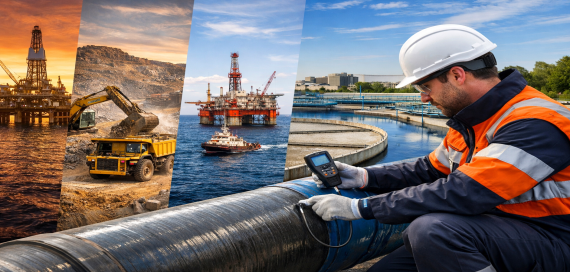
Repair systems using composite materials have become highly effective solutions for the structural reinforcement and repair of industrial pipelines subjected to corrosion, mechanical wear, aging, and severe operating conditions. These systems enable the restoration of structural capacity, increased mechanical strength, and extended asset lifespan—often avoiding complex and costly replacements.
However, the actual performance of these systems depends not only on the material applied but, fundamentally, on the existence of a structured inspection program, carried out before, during, and after application, and maintained throughout the pipeline's lifecycle.
Inspection ceases to be a purely operational activity and becomes a central requirement for engineering, safety, and asset integrity management.
1. Pre-Application Inspection: The Foundation of Engineering Decision-Making
Before applying any epoxy composite repair system, inspection is essential to:
Applying reinforcement without this evaluation means accepting hidden structural risks.
2. Inspection During Application: Process Control and Quality Assurance
Field experience and failure analyses show that most issues related to polymer composite repairs are not associated with the material itself, but with process deviations during application. Inspection at this stage ensures:
3. Post-Application and In-Service Inspection: Structural Integrity Assurance
After application and throughout pipeline operation, inspection allows:
This approach is consistent with Pipeline Integrity Management (PIM) principles adopted across high-risk industries.
4. Inspection as a Pillar of Safety and Operational Reliability
In sectors such as oil & gas, mining, offshore, energy, and water infrastructure, pipeline failures may result in leaks, accidents, environmental damage, and significant financial losses.
Systematic inspection ensures that reinforced or repaired areas continue to perform their structural function under real operating conditions, significantly increasing system reliability and operational safety.
5. Regulatory Compliance and Asset Integrity Management
Well-structured inspection programs are a fundamental part of regulatory compliance and asset integrity management systems. Key international references applicable to composite pipeline repairs include:
These standards reinforce that structural repairs must be engineered, executed, and inspected, with proper technical documentation and traceability.
Without inspection, there is no technical validation. Without validation, there is no engineering—only assumption.
6. Inspection as Asset Intelligence and Return on Investment
From a strategic and financial perspective, inspection:
Structural reinforcement without inspection is risk. Structural reinforcement with inspection is asset intelligence.
Conclusion
Epoxy polymer composite repair systems are proven and mature engineering solutions for pipeline reinforcement and repair. However, inspection is what ensures these solutions meet safety, performance, and compliance requirements over time.
More than an operational cost, inspection is a strategic investment in reliability, safety, and industrial sustainability, supported by international standards and best engineering practices.
Maxepoxy - Maximizing Asset Efficiency
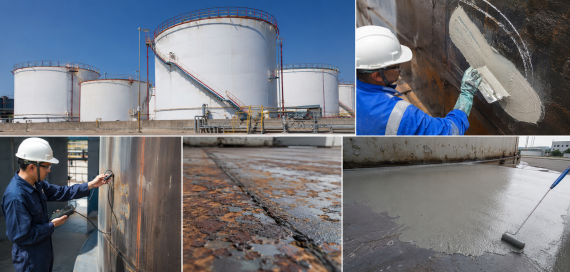
Large storage tanks are often among the most overlooked critical assets in an industrial facility.
Read More
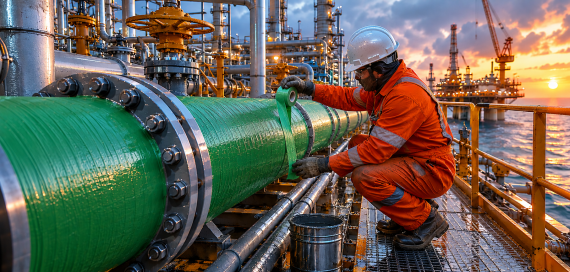
Integrity, Performance, and Cost Reduction in Offshore, Steel, Oil & Gas, and Other Industrial Sectors
Read More

 Back
Back
