
 Ready to showcase our unparalleled expertise and unparalleled product range to customers around the world.
Maxepoxy engineering develops solutions for oil-contaminated surfaces and submerged structures
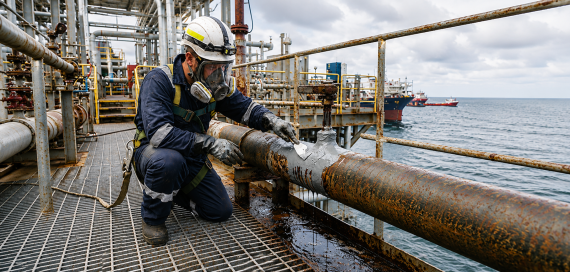
Maxepoxy engineering develops solutions for oil-contaminated surfaces and submerged structures, reducing the risk of leaks, operational losses, and prolonged maintenance shutdowns.
When a pipeline, storage tank, or industrial asset suffers from leakage, corrosion, or wear, the challenge extends far beyond repairing the equipment itself. In many cases, operations must be shut down, the area isolated, the surface prepared, and suitable conditions established before repairs can begin. This process can take hours—or even days—directly impacting production, operational costs, and plant safety.
To address this challenge, Maxepoxy, a company specializing in advanced engineering materials, has developed two technologies specifically designed for the emergency maintenance of industrial assets.
After years of research and investment in materials engineering, the company created polymer composites capable of bonding directly to oil-contaminated surfaces and even to submerged structures. This innovation eliminates several conventional repair steps and significantly reduces the time required to return equipment to service.
Developed under Maxepoxy's own quality standards, these technologies address a market need that, for decades, had been met primarily by imported solutions.
The products, MAX 5611 and MAX 5361, are based on the same proprietary technology platform but were engineered for different emergency repair conditions.
MAX 5611 was developed for repairs on oil-contaminated surfaces commonly found on pipelines, tanks, valves, flanges, transformers, and storage vessels.
MAX 5361, on the other hand, was specifically designed for applications in wet environments or permanently submerged structures, including equipment operating in direct contact with water.
Both materials incorporate Active Direct Adhesion (ADA) technology, allowing application under conditions traditionally considered unsuitable for conventional repair systems, which typically require complete surface cleaning before installation.
By eliminating or minimizing surface preparation, ADA technology significantly reduces maintenance time and helps prevent extended production shutdowns.
In addition to rapid application, both polymer composites were engineered to withstand severe mechanical conditions, including abrasion, compression, erosion, and corrosion. They can also be used for thickness restoration, rebuilding pitted and damaged surfaces, surface profiling, and active leak sealing, extending the service life of critical industrial assets.
This innovation comes at a time when industries such as oil and gas, mining, steel production, water and wastewater treatment, pulp and paper, and other process industries are seeking to reduce operational losses while improving asset reliability.
In many of these sectors, unexpected shutdowns can result in substantial financial losses, productivity setbacks, and logistical disruptions.
According to Thomas Fink, CEO of Maxepoxy, the development represents more than the launch of new industrial maintenance materials—it reflects the advancement of Brazilian engineering in a highly specialized field.
"By developing highly sophisticated technologies at our own headquarters, our engineers are expanding the innovation capabilities of Brazilian industry and demonstrating that world-class, high-performance solutions can be created here at home to solve industrial challenges across the globe," concluded Fink.
By Press Office
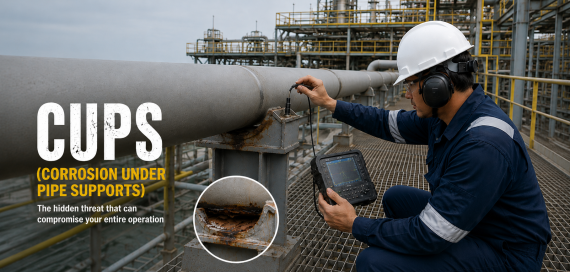
Hidden Degradation Mechanisms and Integrity Risks in Critical Industrial Piping Systems
Read More
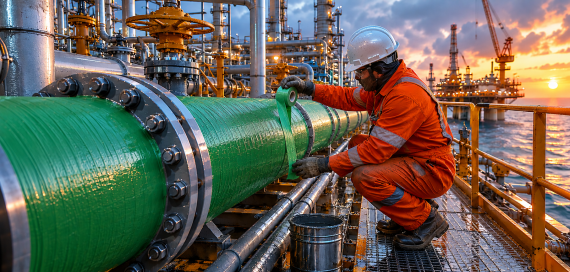
Integrity, Performance, and Cost Reduction in Offshore, Steel, Oil & Gas, and Other Industrial Sectors
Read More

 Back
Back
